 ▶
▶Beyond the Atlas
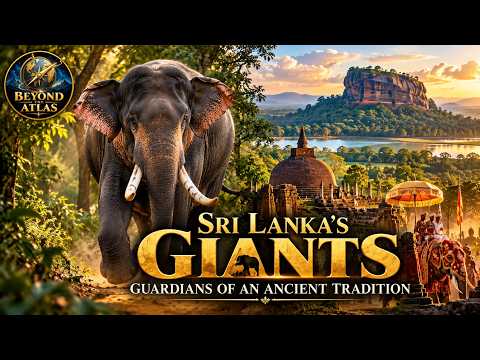
Sri Lanka’s Elephants: Giants of the Wild, Guardians of an Ancient Tradition
Few animals are as deeply connected to the identity of a country as the elephant is to Sri Lanka. For thousands of years, elephants have walked through the island’s forests, grasslands and ancient kingdoms. They appear in stone carvings, religious traditions and stories passed from one generation to another. Today, they remain one of Sri Lanka’s most remarkable wildlife treasures. But the story of the Sri Lankan elephant is about much more than wildlife. It is the story of an extraordinary relationship between an animal, an island and its people. ## A Giant Found Nowhere Else The Sri Lankan elephant (*Elephas maximus maximus*) is a subspecies of the Asian elephant and is generally regarded as the largest of the living Asian elephant subspecies. Adult males can weigh several tonnes and may stand close to three metres tall at the shoulder. Their appearance is distinctive too. Sri Lankan elephants often have relatively dark skin, with areas of pinkish depigmentation visible around the face, ears and trunk. Perhaps one of their most interesting characteristics is something they often **don't** have: large tusks. Unlike African elephants, prominent tusks are relatively uncommon among Sri Lankan elephants. This makes the sight of a magnificent Sri Lankan tusker particularly memorable. ## Life Inside an Elephant Family Behind their enormous size lies an incredibly complex social world. Elephant families are generally centred around females. Mothers, daughters, sisters and calves travel together, often under the guidance of an experienced older female. For young elephants, the herd is also their classroom. By following older members of the family, calves gradually learn where to find water, which plants to eat, where dangers may exist and how to interact with other elephants. Their extraordinary trunks play a major role in this life. An elephant uses its trunk for feeding, drinking, smelling, touching and communicating. Adult males tend to follow a different path. As they mature, bulls often become more independent, sometimes travelling alone or associating loosely with other males. And some of these journeys eventually lead elephants towards one of Sri Lanka's most spectacular natural events. ## The Gathering at Minneriya During Sri Lanka's dry season, something remarkable happens in the north-central part of the island. As water levels fall at Minneriya Tank, fresh grass begins growing on the exposed reservoir bed. Elephants from the surrounding landscape gradually arrive to take advantage of the available water and food. At first there may be only a few. Then dozens. Under the right conditions, enormous numbers of elephants can gather within the same landscape. This phenomenon has become famous as **The Gathering** and is widely described as one of the world's great seasonal concentrations of wild Asian elephants. Families arrive with their calves. Young males mingle nearby. Huge adult bulls wander across the grasslands while elephants drink, feed, bathe and socialise. But there is another fascinating dimension to the story. Minneriya Tank itself is an ancient reservoir. A structure created by people many centuries ago has become part of a modern wildlife phenomenon. It is an extraordinary meeting between **ancient engineering and wild nature**. ## Elephants and Ancient Sri Lanka To understand how deeply elephants are connected to Sri Lanka, we need to look far beyond today's national parks and safari jeeps. Elephants have been woven into Sri Lankan civilisation for centuries. Their images appear in ancient stone carvings, temple decorations and works of art, where they have often represented strength, dignity and importance. Sri Lankan rulers also maintained elephants, which became associated with royal ceremonies, transportation and displays of power. Their significance, however, extended beyond royalty. Within Buddhist tradition, the elephant carries powerful symbolism. In Buddhist accounts, Queen Maya dreams of a white elephant before the birth of Prince Siddhartha, who would later become the Buddha. Across generations, elephants therefore became associated not only with physical strength, but also with dignity, auspiciousness and spiritual significance. And perhaps nowhere is this relationship more visually powerful than in Kandy. ## Elephants of the Kandy Esala Perahera When night falls over Kandy during the Esala Perahera season, the city transforms. Torches illuminate the streets. Drums echo between buildings. Kandyan dancers move through the procession while enormous crowds gather around the Temple of the Sacred Tooth Relic. Among them walk ceremonial elephants. The **Kandy Esala Perahera** is one of Sri Lanka's most important religious and cultural processions. At its heart is the Sri Dalada Maligawa — the Temple of the Sacred Tooth Relic — which houses what Buddhists revere as a Sacred Tooth Relic of the Buddha. The elephant has long occupied an important ceremonial role in this tradition. A carefully selected ceremonial tusker receives the extraordinary honour of carrying the Perahera sacred casket within a magnificent golden structure. Surrounded by lights, drummers, dancers and thousands of devotees, it is one of the most recognisable sights associated with Sri Lankan culture. For devotees, the procession is much more than a spectacle. It represents religious and cultural homage and connects modern Sri Lanka with traditions inherited across generations. At the same time, the involvement of captive elephants has become part of a modern animal-welfare discussion. Understanding the relationship between Sri Lanka and its elephants therefore also requires recognising the responsibility to protect the welfare of animals involved in these traditions. ## When Two Worlds Collide Outside the lights of Kandy and the open landscapes of Minneriya lies a much more difficult reality. Sri Lanka is home to both millions of people and a significant population of wild elephants, and both require land. Elephants do not recognise the borders of national parks. They travel in search of food, water and mates, sometimes moving through forests, farms, villages and roads. When elephant habitat overlaps with human settlements and agriculture, the consequences can be devastating. Crops can be destroyed. Property can be damaged. People can lose their lives. Elephants can also be killed. This **human–elephant conflict** has become one of the greatest challenges facing elephant conservation in Sri Lanka. ## Can Humans and Elephants Share an Island? There is no single solution. National parks provide essential protected habitat, but protecting elephants inside parks alone cannot solve the problem because elephants naturally move across much larger landscapes. Wildlife corridors are important. Land-use planning is important. The placement of electric fences is important. Protecting farms and communities is important. And understanding how elephants actually move through the landscape is essential. Successful conservation cannot simply mean protecting elephants from humans. It must also mean protecting people from elephants. The long-term survival of Sri Lanka's elephants may ultimately depend upon finding practical ways for these two very different worlds to continue sharing the same island. ## More Than an Animal Perhaps this is what makes the Sri Lankan elephant so extraordinary. It exists in several worlds at once. In the forest, it is a wild animal. At Minneriya, it becomes part of one of Asia's great natural spectacles. Carved into ancient stone, it becomes part of history. And beneath the lights of the Kandy Esala Perahera, it becomes part of a living cultural and religious tradition. Few animals are woven so deeply into the story of a country. Long before Sri Lanka had highways, modern cities or today's borders, elephants were already walking across this island. They witnessed kingdoms rise. They walked beside ancient reservoirs. They became part of religion, art and tradition. And they still walk here today. The question facing modern Sri Lanka is whether future generations will inherit an island where these giants can continue to walk — not simply in photographs, documentaries and stories, but **in the wild**. Because the Sri Lankan elephant is more than one of the island's greatest animals. **It is part of the story of Sri Lanka itself.** --- ### Watch the Full Documentary This article accompanies my **Beyond the Atlas** documentary: **Sri Lanka's Elephants — Giants of the Wild, Guardians of an Ancient Tradition** The documentary explores the lives of wild Sri Lankan elephants, the spectacular Gathering, their connection with Sri Lanka's ancient civilisation and religious traditions, and the difficult question of human–elephant coexistence. Watch it on the **Beyond the Atlas YouTube channel** and subscribe for more stories about extraordinary places, cultures, wildlife and mysteries from around the world.
Watch and read →